Pascal Obispo, born on January 8, 1965, in Bergerac, is one of the most significant figures in French chanson. A songwriter, composer, and performer of remarkable versatility, he has built over the decades a career marked by immense popular success, both for himself and for some of the greatest voices on the French-speaking music scene. Florent Pagny, Johnny Hallyday, Garou, Zazie, Marc Lavoine, Natasha St-Pier and Patricia Kaas all owe some of their most iconic songs to him. Added to this is the musical Les Dix Commandements, a true cultural phenomenon that confirmed both the breadth of his songwriting and his ability to reach audiences far beyond the traditional sphere of chanson.
But Pascal Obispo is a man who refuses to be confined to a single definition. Since 2018, a new form of expression has imposed itself upon him with unexpected force: painting. What began as therapy — an intimate response to a profound emotional shock — quickly revealed itself to be something far greater. What seemed at first a refuge became a calling. The passion erupted, asserted itself, and with it came a remarkable discipline that resulted in a pictorial evolution as rapid as it was striking.
The roots of this visual universe stretch back to childhood. As a boy, he would cut faces out of magazines and pin them to the walls of his bedroom, creating a silent gallery of gazes that seemed to answer him back. Years later, these figures would resurface in a new and deeply personal form: the Monoformes. Born directly from his imagination, these creations bring enigmatic faces and characters to life, inviting viewers to question themselves — their choices, their actions, the paths taken or abandoned. It is an open-ended body of work that speaks differently to each person according to what they carry within themselves.
Through his artistic journey, Pascal Obispo demonstrates with disarming sincerity that art — in all its forms — can become a path toward healing.
Following the success of his exhibition Réversibilité, presented last October at the Galerie Ange Basso, he returns today as one of the participating artists in the exhibition Hors Cellule: a natural and deeply personal continuation of the dialogue he has initiated between himself and the world, between his works and those who encounter them.
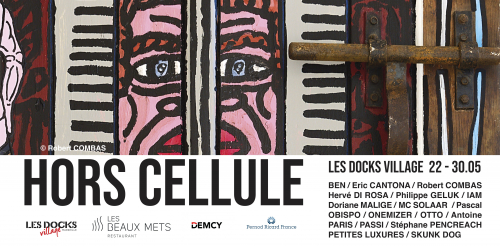
HORS CELLULE
22 May 2026 - 30 May 2026